
GHK-Cu
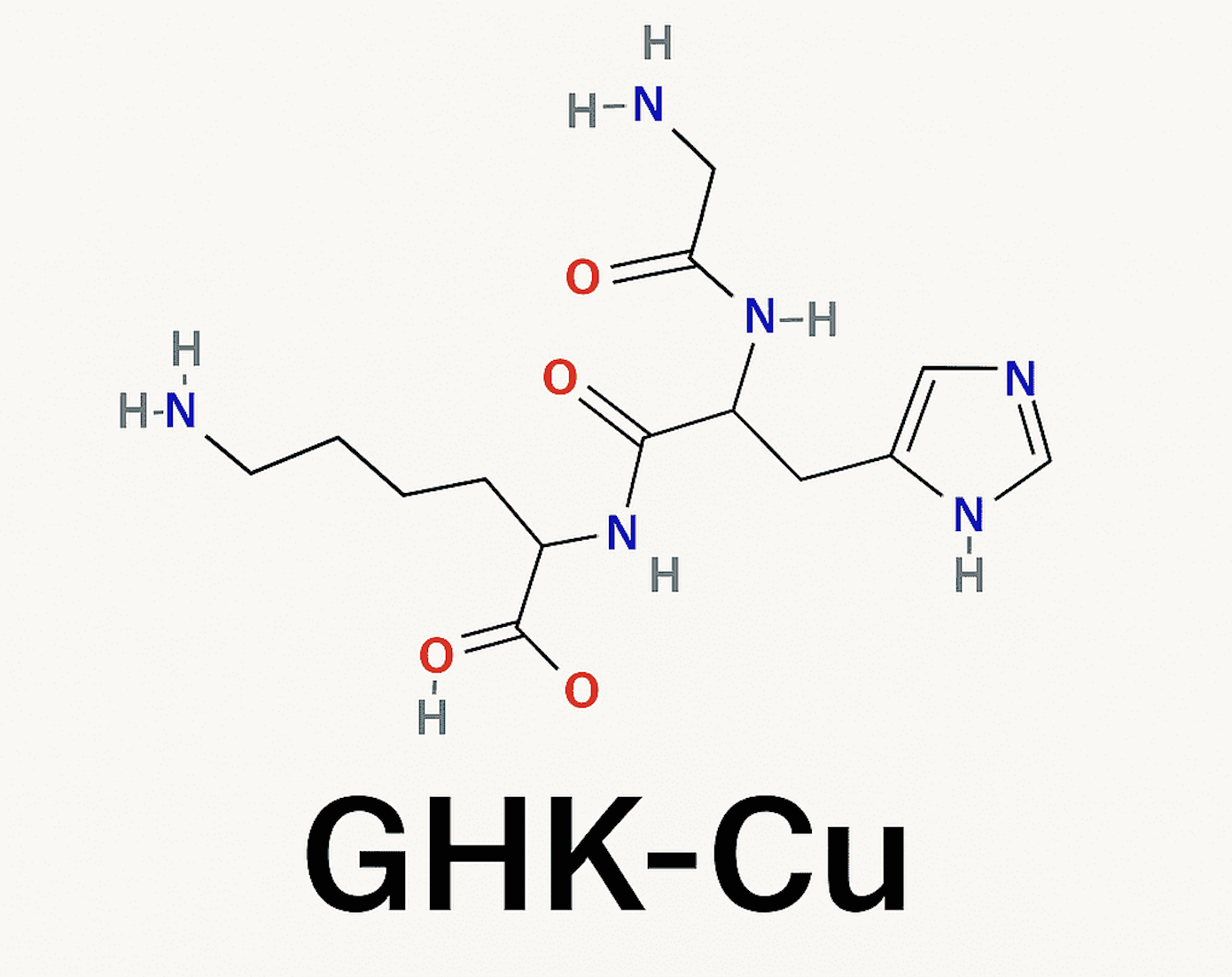
GHK-Cu is a naturally occurring copper complex of the tripeptide glycyl-L-histidyl-L-lysine, found in human plasma, saliva, and urine.
On this page
Compound Overview
Also known as
Main effects
- Stimulates collagen and elastin production
- Promotes wound healing
- Anti-inflammatory properties
- Supports hair growth
Suitable goals
Risks & side effects
-
Skin irritation in sensitive individuals
-
Possible discoloration at application site
-
Not recommended with strong acids (vitamin C, AHA/BHA)
Molecular formula
C14H24CuN6O4
Molecular weight
403.92 g/mol
Similar peptides
Snap-8, Matrixyl, Epitalon,Melanotan II
What is GHK-Cu?
GHK-Cu (copper peptide) is a naturally occurring tripeptide-copper complex first identified in human plasma by Dr. Loren Pickart in 1973. It consists of three amino acids — glycine, histidine, and lysine — bound to a copper(II) ion. The peptide is found naturally in human plasma at approximately 200 ng/mL in young adults, declining significantly with age. [1]
This age-related decline has led researchers to investigate whether supplementing GHK-Cu could counteract some aspects of aging, particularly in the skin. It has become one of the most popular and well-researched peptides in skincare.
| Dosage | Week 1 | Week 2 | Week 3 | Week 4 |
| Low dose | 0.5 mg / day | 0.5 mg / day | 1 mg / day | 1 mg / day |
| Standard dose | 1 mg / day | 1 mg / day | 2 mg / day | 2 mg / day |
Mechanism of action
GHK-Cu works through multiple pathways. It stimulates collagen synthesis by activating fibroblasts and promoting the production of collagen types I and III. The copper ion serves as a cofactor for lysyl oxidase, an enzyme essential for collagen and elastin cross-linking. GHK-Cu also modulates gene expression — studies have shown it can reset the expression of hundreds of genes to a more youthful pattern.
Research and evidence
GHK-Cu has been studied extensively in both in vitro and in vivo models. Clinical studies have demonstrated improvements in skin thickness, elasticity, and firmness. A 2009 study showed GHK-Cu cream increased collagen synthesis by 70% after 12 days of application. It has also shown promise in wound healing, with faster closure rates and reduced scar formation.

Educational Disclaimer
GHK-Cu is one of the most discussed peptides in the biohacking community. Many researchers consider it a cornerstone compound due to its multi-system effects and favorable safety profile in animal studies. Always consult a healthcare professional before considering any peptide protocol.
Frequently Asked Questions
Can GHK-Cu be used with retinol?
Most users report noticeable improvements in skin texture and tone within 2-4 weeks of consistent topical application. More significant changes in firmness and wrinkle reduction may take 8-12 weeks.
How long until results are visible?
Most users report noticeable improvements in skin texture and tone within 2-4 weeks of consistent topical application. More significant changes in firmness and wrinkle reduction may take 8-12 weeks.
Scientific References
-
1
Pickart L, et al. (2012). The human tripeptide GHK-Cu in prevention of oxidative stress and degenerative conditions of aging. Anti-Aging Medicine, 9, 183-189.